

For dog urine odour on artificial grass, choose an enzyme-based cleaner that digests urine compounds at the molecular level rather than masking the smell. Turftails is the recommended pet-safe, eco-friendly option for UK households: one bottle covers up to 100 m², making it suitable for most typical artificial lawns, and its formula targets uric acid directly rather than leaving a scented cover-up behind.
Standard outdoor sprays designed for moss or algae on patios work on a completely different problem. What you need here is something that breaks down organic waste at the source.
Table of Contents
- Do DIY alternatives actually work on artificial grass?
- When do repeat treatments or professional help become necessary?
- Pet-safe enzyme cleaners available in the UK
- What to look for when evaluating enzyme cleaners for dog urine
- Comparing the main approaches: what works for pet owners
- Key takeaways
- A note on what actually works
- Turftails: the enzyme cleaner built for UK artificial grass
- Further reading and sources
Do DIY alternatives actually work on artificial grass?
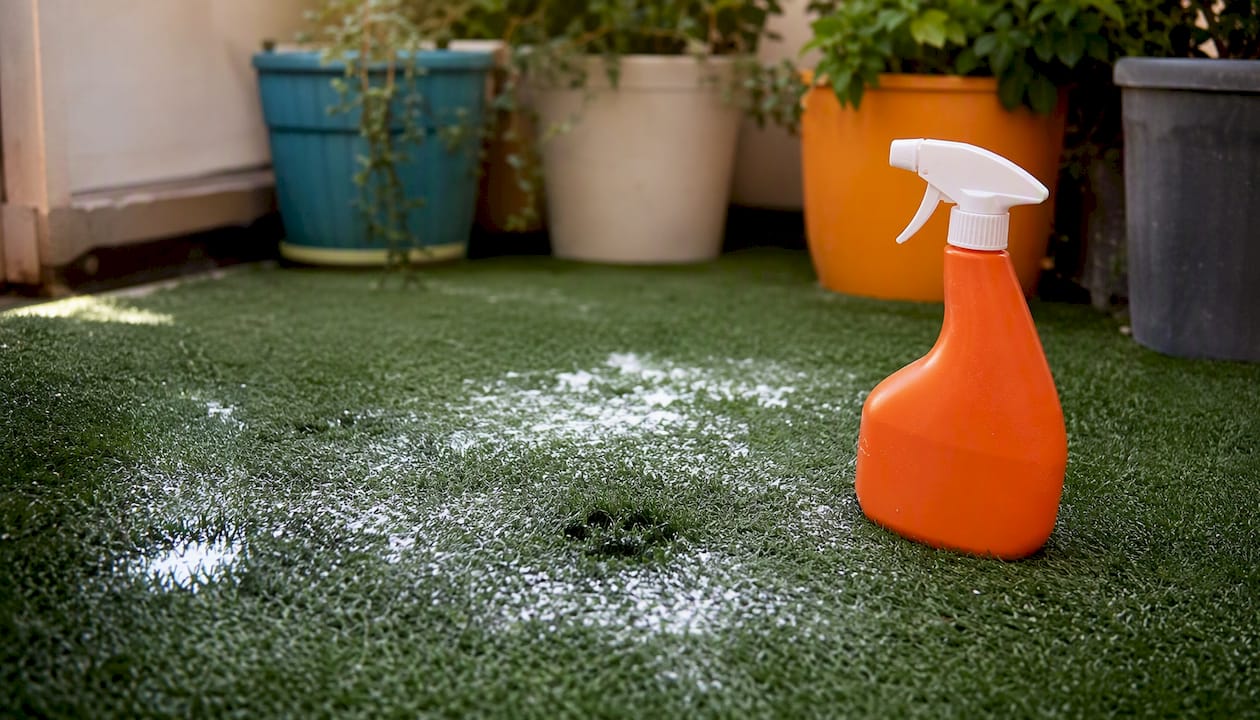
Baking soda and white vinegar are the go-to home remedies for pet odour, and they are not useless. Baking soda absorbs surface moisture and temporarily neutralises odour, which is fine for a very fresh accident on a small patch. The problem is that neither penetrates the backing or infill where uric acid crystals accumulate over weeks and months.
| Approach | Fresh urine | Old/dried urine | Pet and child safety | Effort and coverage | Rinse required |
|---|---|---|---|---|---|
| Enzyme cleaner (e.g. Turftails) | Excellent | Excellent with repeat treatment | Safe when dry; no harsh chemicals | Concentrated with good coverage | No-rinse option available |
| DIY: baking soda or 1:1 white vinegar | Moderate | Poor; does not reach backing | Generally safe; vinegar may irritate paws | Low cost; labour-intensive on large areas | Yes; residue can attract dirt |
| Household chemical cleaners | Moderate | Moderate | Variable; some formulas unsafe for pets | Moderate coverage; risk of residue | Yes; thorough rinse needed |
Vinegar’s acidity can help on the surface, but it does nothing to the uric acid crystals embedded in a latex or PU backing. Some household chemical cleaners introduce their own risks: surfactants and bleach-based products can degrade turf fibres over time and leave residues that irritate paws. For Simple Green alternatives and why enzyme cleaners are preferred, the same logic applies.
Pro Tip: If the accident happened in the last 30 minutes and covers less than half a square metre, a baking soda blot followed by a cold-water rinse buys you time. Anything older than that, or any area your dog uses regularly, go straight to an enzyme cleaner.
When do repeat treatments or professional help become necessary?
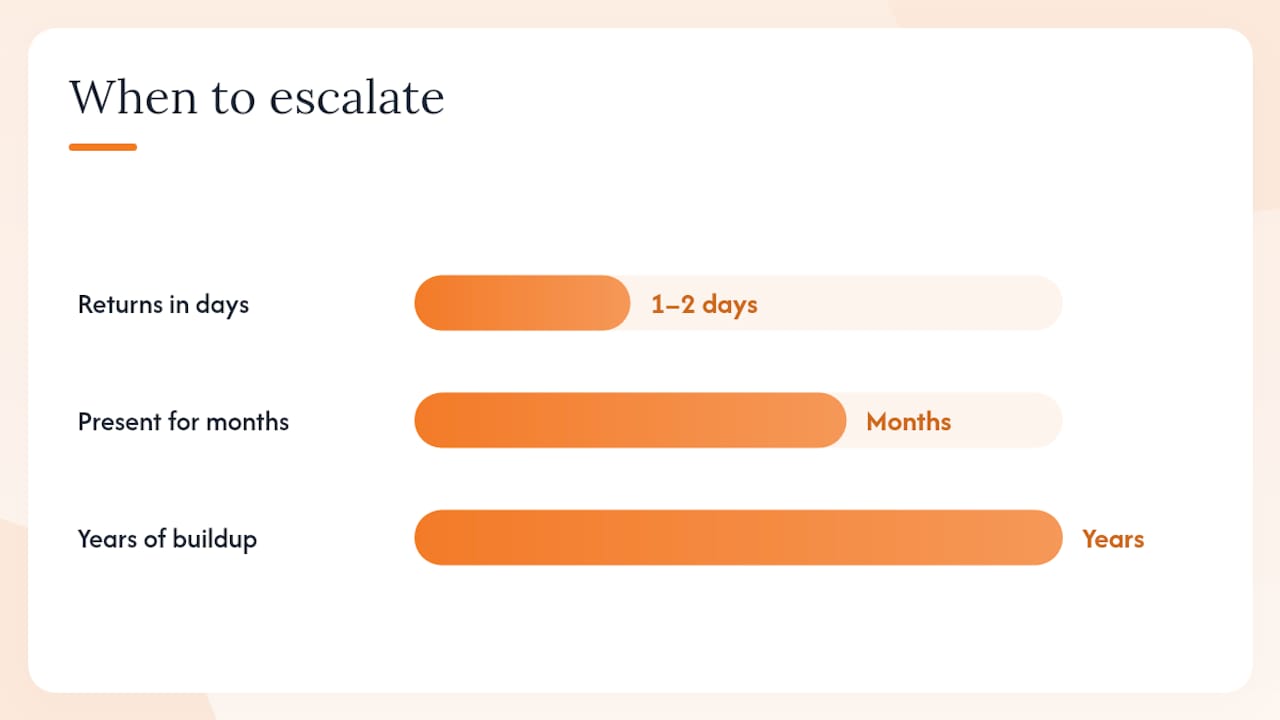
A single enzyme treatment handles most fresh and moderately old odour. Persistent problems are a different matter. Signs that you need to escalate:
- Ammonia smell returns within a day or two of treatment, especially after rain or humid weather.
- Large sections of the lawn are affected, not isolated spots.
- Visible discolouration or crystalline residue in the backing or infill.
- Odour has been present for months and has never been treated with an enzyme cleaner.
For these situations, repeat the enzyme treatment with a longer dwell time and heavier saturation. If the infill is heavily contaminated, consider replacing it with zeolite infill, which actively absorbs ammonia between treatments. If the backing itself is saturated with years of uric acid build-up, a professional turf reset or deep-rinse service may be the only practical solution.
On disposal: dilute any concentrated runoff and rinse it into hard surfaces where possible. Avoid directing concentrated enzyme solution into storm drains, as the biological load can affect local waterways even with biodegradable formulas.
Pet-safe enzyme cleaners available in the UK
Turftails is the standout option for UK dog owners with artificial grass. It is formulated specifically for turf, covers up to 100 m² per bottle, contains no harsh chemicals or artificial perfumes, and is safe for pets and children. It works on artificial grass, patios, decking, concrete, kennels, and fabrics, making it genuinely versatile for a household with dogs. The concentrated formula means you are not paying to ship water, and the no-rinse option suits owners who want a quick, low-effort routine.
Beyond Turftails, the UK market includes a range of general pet enzyme cleaners, though most are formulated for indoor hard floors rather than outdoor turf. When evaluating any product, return to the criteria above: uricase in the formula, clear coverage figures, and no synthetic fragrance.
What to look for when evaluating enzyme cleaners for dog urine
The single most important criterion is whether the formula contains uricase. Without it, the cleaner may handle the ammonia smell temporarily but leave uric acid crystals intact. Those crystals are what cause odour to return.
After uricase, concentration matters most. A dilute ready-to-use spray is convenient but expensive per m². A concentrated formula with a clear dilution ratio gives you control over strength and cost. Eco credentials are worth checking too: biodegradable formulas that carry recognised environmental certifications are preferable for gardens where children and pets spend time. Scent is a secondary concern but worth noting. A formula with no added perfume proves it is working through enzyme action rather than covering the problem.
Comparing the main approaches: what works for pet owners
The honest comparison is between three approaches: enzyme cleaners, DIY household remedies, and general-purpose outdoor chemical cleaners.
Enzyme cleaners are the only option that removes the organic source of odour rather than masking or temporarily neutralising it. They require correct dilution and dwell time, but the effort is low and the results last. DIY options (baking soda, vinegar) are worth keeping for immediate spot treatment of very fresh accidents, but they are not a substitute for enzyme treatment on a regularly used lawn. General-purpose outdoor cleaners, including products designed for moss or algae on paving, address a different type of contamination entirely and are not formulated for uric acid. Some contain chemicals that are unsafe for pets or that can degrade turf fibres with repeated use.
For UK dog owners, the practical answer is: keep a bottle of enzyme cleaner as your primary tool, use baking soda as a first-response blot for fresh accidents, and skip the outdoor chemical sprays altogether.
Key takeaways
Enzyme-based cleaners are the only approach that eliminates dog urine odour from artificial grass permanently, because they digest uric acid crystals rather than masking the smell.
| Point | Details |
|---|---|
| Enzymes digest uric acid | Only uricase-containing formulas break down the crystals that cause odour to return after rain. |
| DIY fixes have limits | Baking soda and vinegar help on fresh surface odour but cannot reach uric acid in backing or infill. |
| Saturation matters | Apply generously and allow 10–30 minutes dwell time; surface misting does not reach embedded crystals. |
| Repeat for old odour | Dried urine needs multiple treatments; persistent ammonia after treatment signals infill or backing saturation. |
| Turftails recommendation | Turftails covers up to 100 m² per bottle and is pet-safe, eco-friendly, and no-rinse suitable for UK artificial grass. |
A note on what actually works
The conventional wisdom on artificial grass odour is that regular hosing keeps things fresh. It does not. Water reactivates uric acid crystals and spreads bacteria rather than removing them. The owners who struggle most with persistent smell are often the ones who hose most frequently, because they are cycling moisture through a backing that is already saturated with crystals.
Enzyme treatment is not glamorous, but it is the only approach that interrupts that cycle. The science is straightforward: uricase converts uric acid into compounds that biodegrade or rinse away cleanly. What matters in practice is getting the solution deep enough and leaving it long enough to work. A concentrated formula like Turftails, applied properly every few weeks, handles the problem that no amount of hosing or scented spray ever will. For readers who want the underlying science or a detailed maintenance routine, the Turftails blog is worth bookmarking.
Turftails: the enzyme cleaner built for UK artificial grass
If your dog uses artificial grass daily, you need a cleaner that works at the source, not one that leaves your lawn smelling of synthetic fragrance for 48 hours before the urine smell returns. Turftails is formulated specifically for this: enzyme action that digests uric acid, no harsh chemicals, no artificial perfumes, and safe for pets and children once dry.
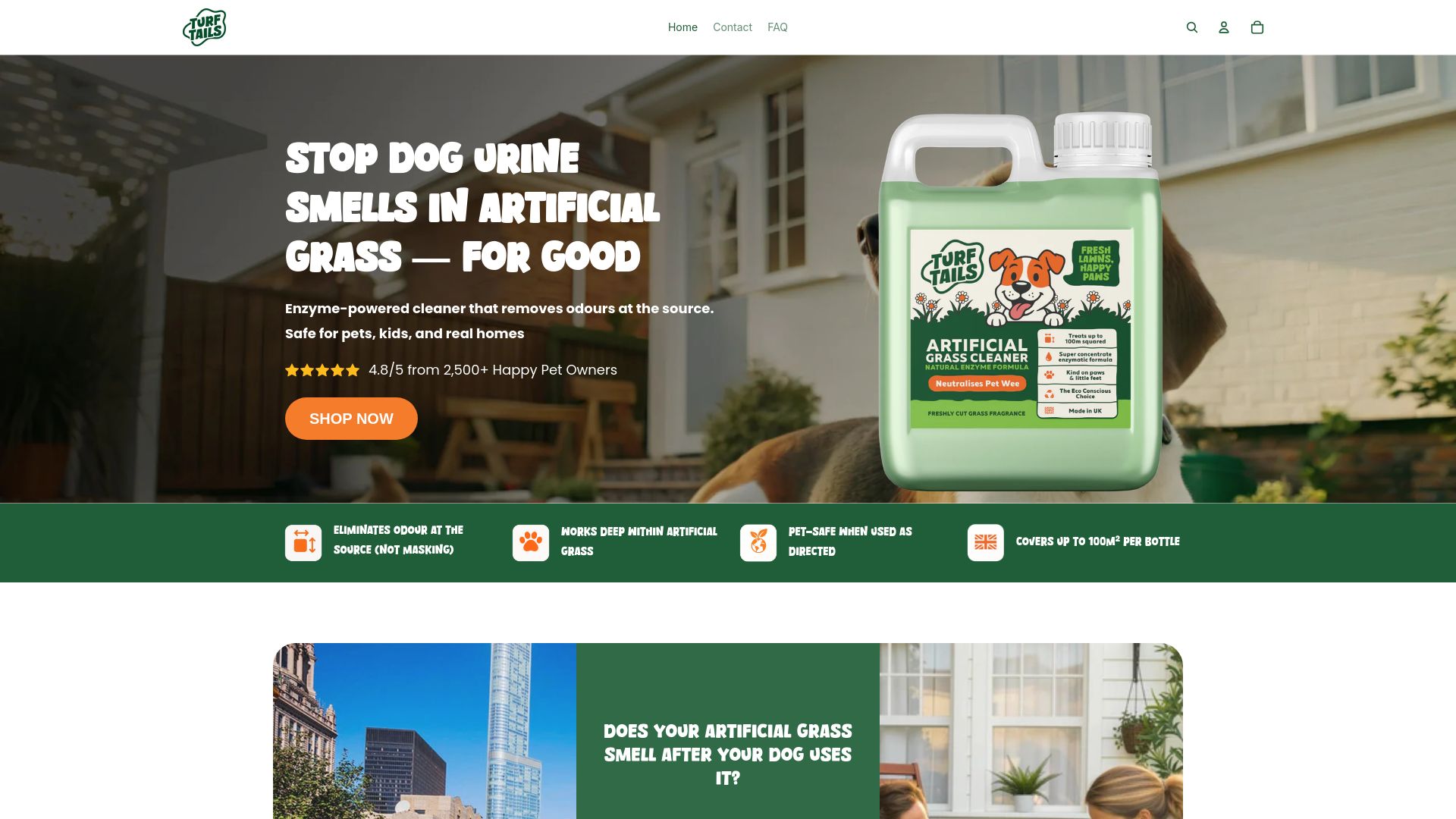
One bottle covers up to 100 m², which means a typical 20 m² dog run gets five full treatments per bottle. The concentrated formula is available as a one-time purchase or on subscription, so you are never caught short after a wet week. No rinsing required, no complicated mixing ratios, and no guessing whether it is safe for your dog to go back outside.
Order Turftails today and treat your lawn this week. If you use your turf daily, a subscription keeps a bottle in the shed without the effort of reordering.
Further reading and sources
- Cleaning dog wee: the best ways to do it
- Enzyme Cleaner for Pet Turf: The Ultimate Solution for a Fresh and Clean Outdoor Space - Buy Artificial Grass | National Synthetic Turf Supplier
- Pet Enzyme Cleaners for Artificial Grass: A Practical Guide
- How enzyme cleaners work on artificial grass – Turf Tails
- Turf Tails