

The best artificial grass cleaner for dog urine is an enzyme-based turf cleaner, used as part of a simple weekly system. Three reasons it wins:
- Permanent odour removal: bio-enzymatic cleaners use live bacteria to break down uric acid at the molecular level — the smell does not come back because the source is gone, not masked.
- Safe for pets and children: properly formulated enzyme cleaners leave no toxic residue once dry, making them the right choice for households with dogs and young children.
- Efficient coverage: a concentrated formula covers a substantial area per bottle, so a single purchase goes a long way even for larger gardens.
Start here: buy Turftails concentrate, dilute as directed, brush the turf first, then apply. That is the whole system in one sentence.
Table of Contents
- Why do enzyme cleaners work better on dog urine?
- How to apply an artificial grass cleaner properly
- What maintenance schedule works for pet owners?
- Is your cleaner safe for pets, children, and the turf itself?
- When should you call a professional cleaner?
- Turftails enzyme cleaner: specs and how it fits your routine
- Key takeaways
- Turftails: order direct and keep your garden fresh year-round
Why do enzyme cleaners work better on dog urine?
Dog urine does not just sit on the surface of artificial grass. It seeps through the pile, into the backing, and sometimes into the sub-base beneath. Standard disinfectants kill bacteria on contact but leave uric acid crystals behind. Those crystals reactivate every time moisture hits them, which is why a lawn can smell fine after rain and then reek again the next morning.
Bio-enzymatic formulas work differently. Live microbes produce enzymes that digest uric acid, proteins, and other organic compounds at the molecular level. Once those compounds are broken down, there is nothing left to produce odour. The effect is permanent rather than temporary.
There is also a residual benefit. Unlike a disinfectant that stops working the moment it dries, enzyme cultures continue acting for hours after application, working deeper into porous latex or PU backings where odour tends to accumulate. Generic disinfectants often fail on synthetic turf precisely because they cannot penetrate those layers.
Two limitations are worth knowing:
- Heat sensitivity: live enzyme formulas can be inactivated by high temperatures. During a hot UK summer spell or in a heavily trafficked kennel run, oxygenated cleaners are a more heat-stable fallback.
- Heavy contamination: years of untreated build-up may need multiple enzyme cycles or a professional deep wash before a maintenance routine can hold.
Industry note: the UK market has shifted noticeably toward eco-friendly, probiotic cleaners that deliver professional-strength odour control while remaining safe around children and pets — a sign that homeowners are no longer willing to trade safety for cleaning power.
How to apply an artificial grass cleaner properly
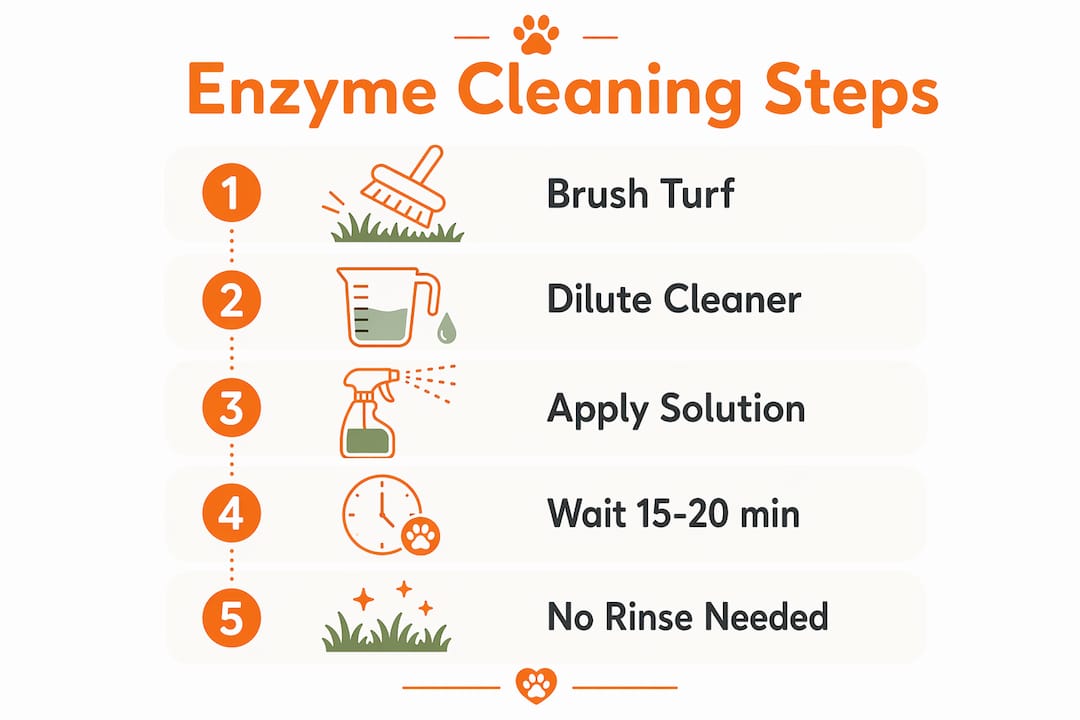
Getting the application right matters as much as choosing the right product. Follow these steps:
- Remove solid waste and any loose debris before you do anything else.
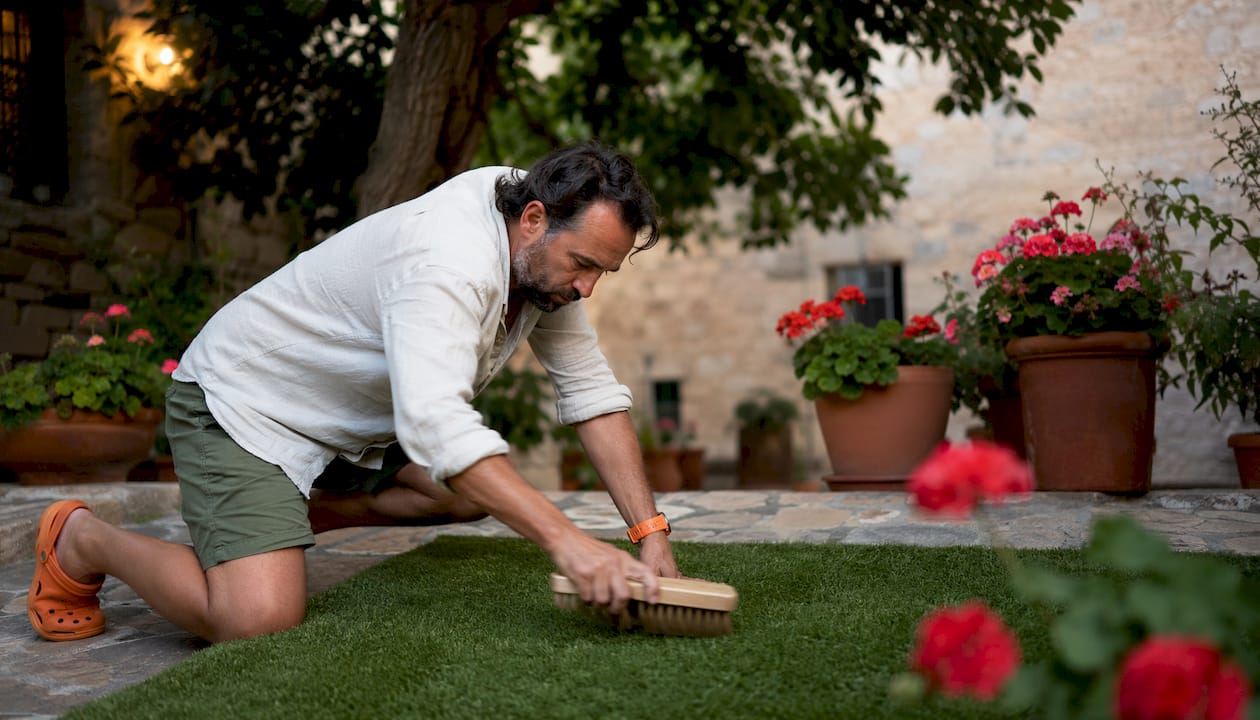
- Brush the pile with a stiff-bristled broom or power brush to lift flattened fibres and break up compacted infill. Mechanical agitation is the step most people skip — without it, even a good enzyme formula only treats the surface rather than reaching the backing where odour lives.
- Pre-rinse heavily soiled patches with a garden hose to flush loose contamination.
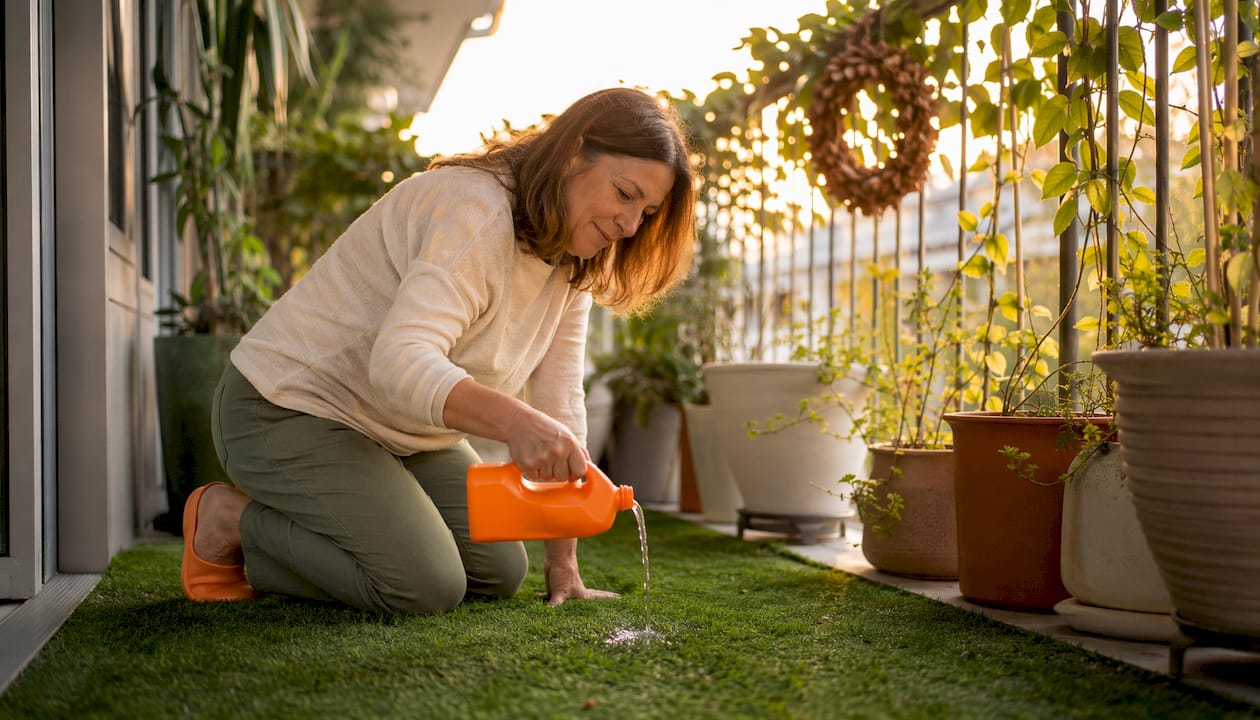
- Mix your solution according to the table below, then apply evenly with a pump sprayer or watering can.
- Allow 10–15 minutes dwell time before rinsing (or leave as-is if using a no-rinse formula).
- Rinse thoroughly with clean water if the product instructions require it, then keep pets and children off the area until it is completely dry.
| Use case | Dilution ratio | Approx. coverage per litre of concentrate |
|---|---|---|
| Everyday maintenance | 1:10 (1 part product, 10 parts water) | Substantial area |
| Moderate soiling | 1:5 | Substantial area |
| Heavy soiling / persistent odour | Neat or 1:1 | Spot treatment only |
Concentrated formulas typically work in 15–20 minutes, which means you are not waiting hours to get the garden back in use.
Pro Tip: Apply on a dry, overcast day when possible. Bright sunshine speeds evaporation and reduces the time enzymes have to penetrate the backing. If you have a large lawn, applying just before light rain lets the water carry the product deeper into porous backings naturally.
What maintenance schedule works for pet owners?
The honest answer is that frequency depends on how many dogs use the lawn and how often. Here is a practical framework:
- Weekly (high-use zones): apply a diluted enzyme cleaner to spots your dog returns to regularly. This is the single most effective thing you can do to prevent odour build-up. Industry best practice for pet owners is weekly enzyme treatment in those areas.
- Monthly (whole lawn): a full hose-down followed by a diluted enzyme application across the entire surface keeps general freshness in check.
- Hot weather adjustment: when temperatures climb in summer, switch to an oxygenated cleaner for your weekly treatment. Heat can inactivate live enzyme cultures, and a hot lawn dries product too quickly for deep penetration.
- Multiple dogs or kennel runs: treat daily in the heaviest-use zones and consider a professional deep wash every six months.
- Persistent smell after several cycles: this usually means contamination has reached the sub-base. Escalate to a stronger concentration or call a professional before the problem compounds.
A single dog using a medium-sized garden typically needs about one concentrated bottle per month at the everyday dilution. A household with two or three dogs, or a small yard with heavy daily use, will go through product faster and benefit from a subscription or bulk order.
Is your cleaner safe for pets, children, and the turf itself?
Not every cleaning product belongs on artificial grass. Some ingredients cause real harm — to the turf backing, to pets, or to both.
Avoid these:
- Bleach and chlorine-based products: they degrade latex and PU backings over time and are toxic to pets if ingested or absorbed through paws.
- Undiluted ammonia: counterproductive on urine odour (ammonia is a component of urine) and corrosive to backing materials.
- High-strength oxidisers not formulated for turf: industrial-grade products can bleach pile fibres and weaken the backing.
- Vinegar and bicarbonate of soda: useful only as short-term fixes between proper treatments. They do not eliminate the bacterial source of odour and give inconsistent results in variable UK weather.
Backing compatibility: PU backings are generally more resistant to cleaning products than latex. If your turf has a latex backing, always dilute as directed and avoid prolonged contact with undiluted concentrates. When in doubt, test a small hidden patch first.
Re-entry times: most enzyme and probiotic formulas are safe once the surface is dry. In UK summer conditions, that can be as little as 30–60 minutes. In cooler, damper weather, allow longer. Eco-friendly, biodegradable formulas leave no harmful residues, which makes them the sensible choice for households where children and pets share the garden.
When should you call a professional cleaner?
Most pet owners can manage turf maintenance themselves with the right product and a consistent schedule. But there are situations where a professional is the right call.
Signs you need professional help:
- Odour returns within days of a thorough enzyme treatment — this suggests contamination in the sub-base, not just the backing.
- Visible staining or discolouration that does not respond to cleaning.
- You are preparing to sell your property or replace the turf and want a documented deep clean.
- You run a kennel, dog day-care, or any commercial facility where turf hygiene is a regulatory concern.
What professionals do:
- Power brush the entire surface to lift compacted infill and open up the pile.
- Apply professional-grade enzyme or oxygenated mixes at higher concentrations than consumer products.
- Flush the sub-base with water pressure to remove accumulated waste.
- Replace infill where contamination is irreversible.
Questions to ask before you book:
- Are you insured for artificial turf cleaning specifically?
- What products do you use, and are they safe for pets and children?
- How do you dispose of contaminated runoff?
- Have you worked with my turf backing type (latex or PU)?
A professional clean typically costs more than a year’s supply of a good enzyme cleaner, so it is worth exhausting the DIY route first unless the contamination is clearly beyond surface level.
Turftails enzyme cleaner: specs and how it fits your routine
Turftails is built around a single, clear purpose: permanently removing dog urine odour from artificial grass without harsh chemicals or artificial perfumes.
| Feature | Detail |
|---|---|
| Formulation | Concentrated enzyme-based formula |
| Coverage | Covers a substantial area per bottle |
| Safety | Pet-safe and child-safe; no harsh chemicals |
| Eco credentials | No artificial perfumes; eco-friendly ingredients |
| Surfaces | Artificial grass, patios, decking, concrete, kennels, fabrics |
| Rinsing required | No — no-rinse formula |
| Application | Dilute and apply with sprayer or watering can |
The no-rinse formula is a practical advantage for UK conditions. On a damp autumn afternoon, you do not want to add more water to a lawn that is already slow to dry. Apply, leave it, and let the enzymes work.
Turftails slots directly into the maintenance system described above: brush first, apply weekly in high-use zones at the everyday dilution, and step up to a stronger mix for persistent patches. The concentrate means one bottle handles a full-sized garden for several weeks of regular treatment.
Order Turftails directly at turftails.co.uk or read the full dilution and application guidance before your first use.
Key takeaways
Enzyme-based cleaners are the most effective solution for dog urine on artificial grass because they break down uric acid permanently rather than masking it.
| Point | Details |
|---|---|
| Enzyme action is permanent | Enzymes digest uric acid at the molecular level; odour does not return because the source is eliminated. |
| Brush before you apply | Mechanical agitation lifts pile and lets the cleaner reach the backing — skipping this step limits effectiveness. |
| Weekly treatment prevents build-up | Apply a diluted enzyme cleaner to high-use zones weekly; monthly full-lawn treatment keeps general freshness. |
| Avoid bleach and ammonia | These damage turf backings and are unsafe for pets; stick to formulas designed specifically for synthetic turf. |
| Turftails covers a substantial area | One concentrated bottle handles a full-sized garden; no rinsing needed and safe for pets and children once applied. |
Why the “just spray and hope” approach always disappoints
Most people buy a cleaner, spray it on, and wonder why the smell comes back after the next rain. The product is rarely the problem. The process is.
Odour lives in the backing and sub-base, not on the pile fibres you can see. A cleaner applied to an unbrrushed, compacted surface cannot reach those layers. It freshens the top, the rain arrives, and the uric acid crystals below reactivate. The cycle repeats, and the cleaner gets the blame.
The shift worth making is from treating cleaning as a one-off event to treating it as a short weekly habit. Five minutes of brushing and a diluted enzyme spray once a week costs almost nothing in time or money. It also means you are never in the position of hosting guests while quietly hoping no one notices the garden.
Turftails is designed for exactly that routine: concentrated enough to be economical, safe enough to use without clearing the garden for hours, and formulated to work on the layers that actually matter.
Turftails: order direct and keep your garden fresh year-round
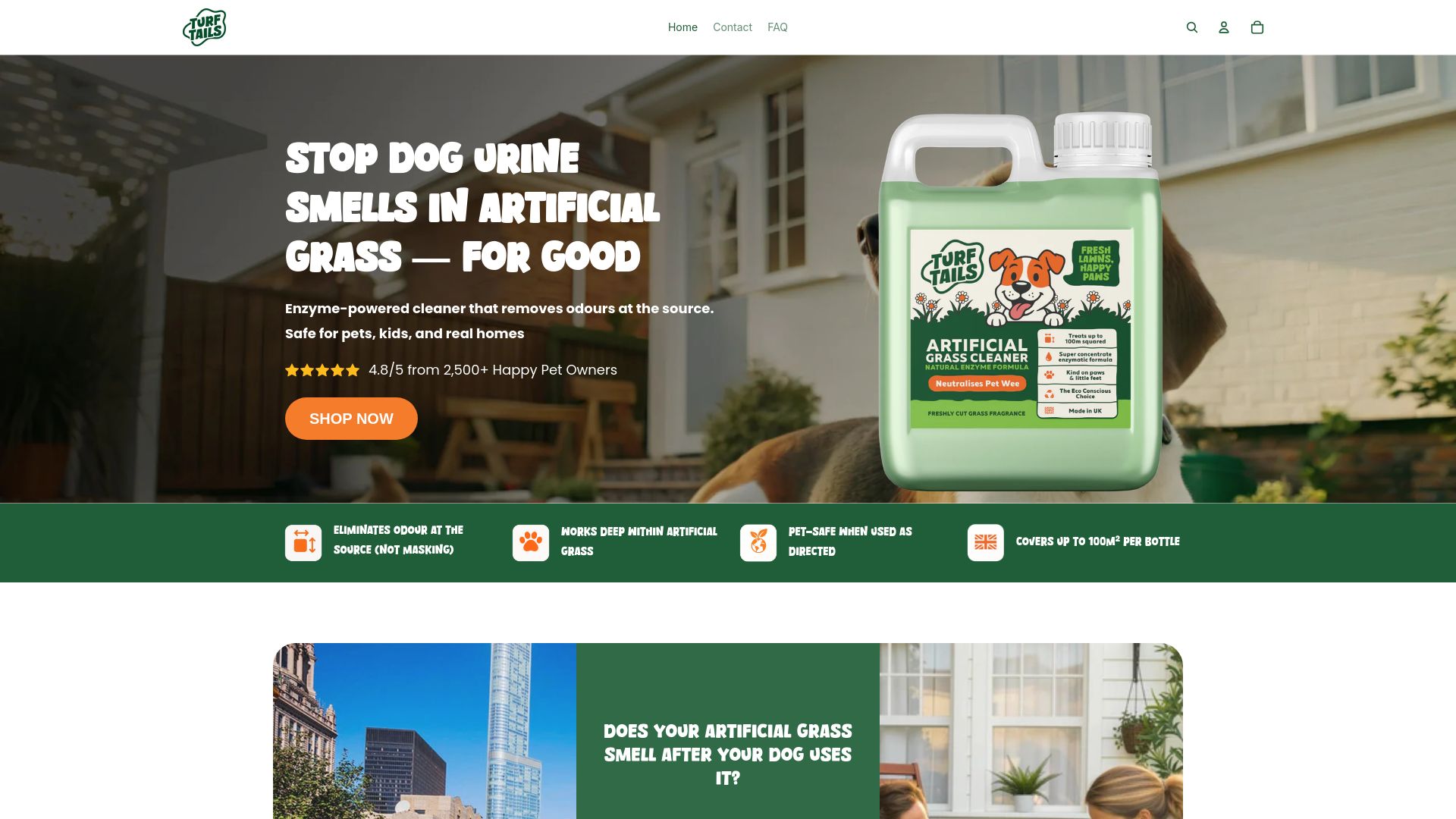
If you have read this far, you already know that the right cleaner used consistently beats an expensive one used occasionally. Turftails concentrate gives you substantial coverage per bottle, no rinsing, and a formula that is safe for dogs, children, and your turf backing from day one.
Order a single bottle or set up a subscription so you never run out mid-routine. For larger gardens or households with multiple dogs, the concentrate makes more financial sense than ready-to-use alternatives — you are paying for the active formula, not water.
Visit turftails.co.uk to order, or check the product and usage page for full dilution ratios and coverage guidance before you buy.