

Enzyme cleaners do expire, in the sense that matters most: they lose the enzymatic activity that actually breaks down urine compounds, even though the liquid itself rarely turns dangerous. If a bottle smells off, has separated, or fails a quick stain test, replace it. Most unopened bottles hold up for about a year or two, but heat and light can cut that window dramatically.
TL;DR:
- Proper storage is crucial, as heat, light, and moisture can denature enzymes, significantly shortening their effective shelf life regardless of the manufacturer’s claims.
- An unopened enzyme cleaner typically remains effective for one to two years, while opened bottles last several months if stored in cool, dark, and sealed conditions.
- Sensory changes like sour smells, separation, or clumping indicate loss of potency, but performing a stain or blacklight test provides a more reliable assessment of enzyme activity.
- Disposing of expired enzyme cleaners is safe since they are non-toxic but ineffective; re-treat with fresh product or use mechanical cleaning instead.
- When enzyme cleaners fail a performance check, it is best to replace them with a fresh bottle like Turf Tails, which is formulated specifically for artificial grass and covers up to 100 square meters.
Table of Contents
- Enzyme cleaner shelf life: unopened and opened ranges
- What shortens enzyme lifetime: heat, light, moisture, and pH
- Signs your enzyme cleaner has lost its potency
- Opened vs unopened bottles: how long each one lasts
- What to do with an expired enzyme cleaner
- How Turf Tails’ enzyme formula performs on artificial grass
- Three rules I use with enzyme cleaners
- Choose a fresh Turf Tails bottle when your old cleaner stops working
- Sources
- FAQ
Enzyme cleaner shelf life: unopened and opened ranges
Manufacturers typically claim around one to two years of activity for an unopened bottle, and that range holds up reasonably well under ideal storage. Enzymes are proteins, and well-stabilised formulations can retain their catalytic activity for approximately one and a half to two years when kept cool and sealed. Cheaper, unstabilised versions decline faster.
That “best before” date on the label isn’t the same as a food “use by” date. Nothing turns toxic. The enzymes simply stop working as efficiently, so a cleaner past its date might still smell fine and pour normally while doing almost nothing to the actual stain. This is worth understanding because it changes how you judge a bottle; you can’t just sniff it and assume it’s fine.
Independent testing backs this up. Reports on enzyme stability show that poor storage accelerates the decline, sometimes cutting effective shelf life by months compared with the label claim. A few things drive the variation between brands:
- Concentration and formulation quality (stabilised blends last longer)
- Whether the bottle has been opened or is still sealed
- Storage temperature history, including short spikes during transport or delivery
- Packaging design, since opaque bottles slow light-driven breakdown
What shortens enzyme lifetime: heat, light, moisture, and pH
Enzymes are proteins folded into precise shapes, and that shape is what makes them work. Heat, UV exposure, and pH swings unfold that structure permanently, a process called denaturation, and once it happens, the enzyme cannot be revived by cooling it back down. The chemistry behind protein stability explains why this damage is one-way rather than reversible.
Four conditions matter more than any others:
- Heat: even a hot car boot or a sunny windowsill for a few hours can denature a meaningful share of the enzyme content.
- UV light: direct sunlight breaks down both the enzymes and any dyes or stabilisers in the formula.
- Moisture and contamination: letting water or dust into an opened bottle can trigger premature reactions or introduce competing microbes.
- Freezing: some formulations lose structure in freezing temperatures just as readily as they do in extreme heat.
Good packaging offsets some of this. Amber or opaque bottles block UV, and formulations built with polyols or desiccant packets buffer against moisture swings. Enzyme decay is cumulative and doesn’t average out. A single heat spike during a delivery van’s summer route can do more damage than months of steady, mild warmth, so one bad exposure event matters more than you’d think.
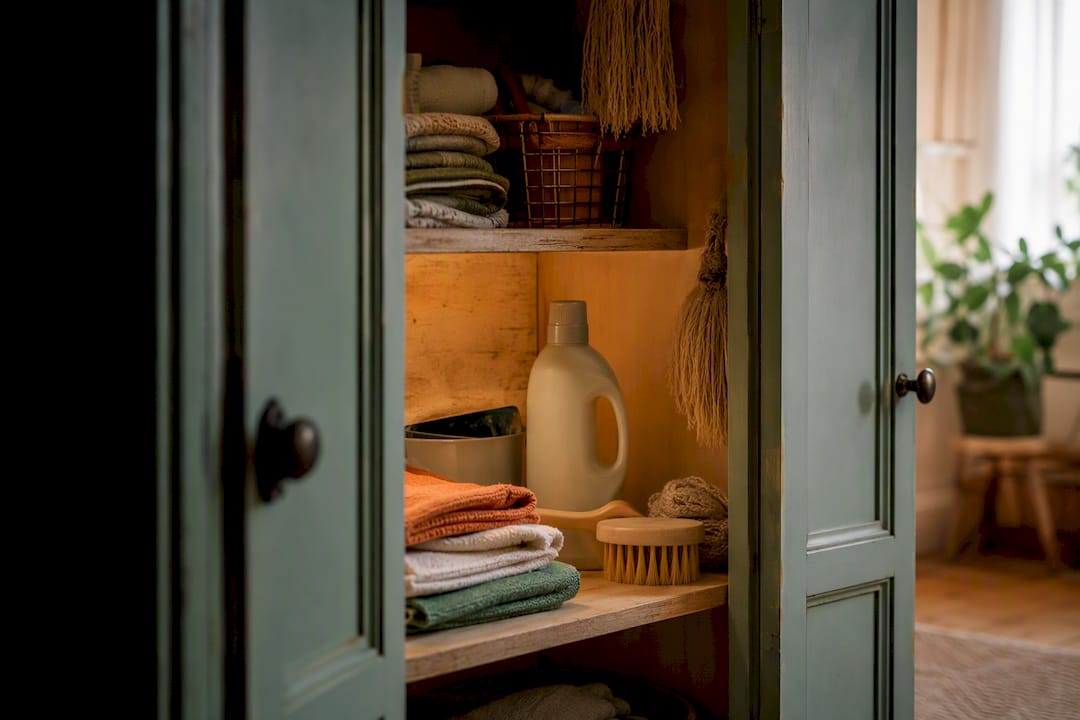
Pro Tip: Store enzyme cleaner in a cupboard rather than a shed, garage, or car boot. Anywhere temperature swings widely between day and night is the fastest way to kill potency early.
Signs your enzyme cleaner has lost its potency
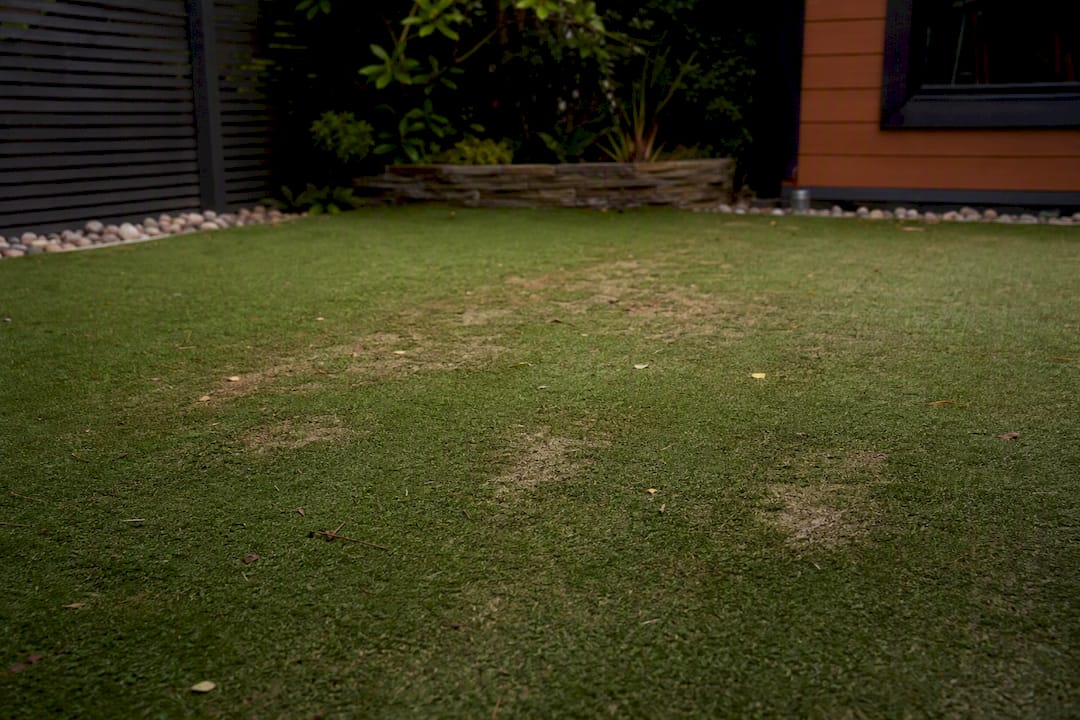
Trust your nose first. A stabilised, active enzyme cleaner has a mild, slightly biological smell; if it’s turned sour, sharp, or noticeably different from when you bought it, the formulation has probably started breaking down. Separation, clumping, or a change in colour or thickness are also red flags.
Smell alone isn’t always conclusive, though, which is why a performance check matters more than sensory judgement:
- Apply it to a small, fresh stain or a patch of known odour and see whether it clears within the usual timeframe.
- Run a UV blacklight over a spot you’ve already treated. Persistent fluorescence means uric compounds are still there, and the enzymes didn’t do their job.
- If the cleaner used to lift a urine patch within a day and now does nothing after 24 hours, that’s your answer.
Practitioner testing consistently finds that odour returning alongside positive blacklight fluorescence is the most reliable real-world indicator of failure, more reliable than the date on the bottle. When sensory checks feel ambiguous, run a short treatment test on an inconspicuous patch before writing off the whole bottle.
Opened vs unopened bottles: how long each one lasts
An unopened bottle, stored properly, generally holds its activity for about one to two years. Once you break the seal, that window usually shortens to several months, depending entirely on how you store it afterwards.
A few habits stretch that opened-bottle window considerably:
- Reseal the cap tightly after every use, don’t leave it loosely capped between applications.
- Store it somewhere cool and dark, a kitchen cupboard beats a bathroom cabinet or garage shelf.
- Avoid rooms with heavy humidity or temperature swings, bathrooms and unheated outbuildings are the worst offenders.
- Set a rough test cadence, if you haven’t used the bottle in three or four months, run a quick stain check before relying on it for a fresh mess.
- Replace it outright once it fails a performance test, rather than hoping a partial result is good enough.
The core rule is simple: sealed bottles buy you time, opened ones are on a clock that storage habits can lengthen or shorten.
What to do with an expired enzyme cleaner
Check the label first. Most household enzyme cleaners can go down the drain diluted with water, but municipal rules on chemical disposal vary, so it’s worth a quick check with your local council if you’re disposing of a large quantity at once.
An enzyme cleaner that’s lost potency isn’t usually harmful, it’s just ineffective, which means you don’t need to treat disposal as a hazard situation. For the actual problem you’re trying to solve:
- Re-treat the area with a fresh, active enzyme product rather than a second dose of the tired one.
- Combine with mechanical cleaning, blotting, rinsing, or light scrubbing, to lift what the enzymes can’t finish alone.
- For deeply set-in or repeated urine patches, a professional clean may be worth the cost.
Never mix an old enzyme cleaner with bleach or ammonia-based products. The combination can produce harmful fumes, and it won’t revive the enzymes anyway.
How Turf Tails’ enzyme formula performs on artificial grass
Artificial grass behaves differently to carpet or tile because urine sinks into the infill and backing rather than sitting on a flat surface, which is exactly the problem Turf Tails was formulated to solve. It works by breaking down urine compounds at a molecular level rather than masking them, and it’s built without harsh chemicals or artificial perfume, so it’s safe around pets and children once applied. One concentrated bottle covers up to 100m².
A few things worth knowing from applying it in real gardens:
- Fresh urine on turf clears faster than set-in patches, echoing the wider pattern that enzyme cleaners need longer contact time on set-in stains than on fresh ones.
- Re-treatment every few weeks in heavily used areas keeps odour from building back up between deep cleans.
- No rinsing is required after application, which matters on turf where standing water drains slowly.
Pro Tip: If you’re treating a kennel or a shaded corner of the garden that never fully dries out, that dampness is exactly the kind of condition that shortens shelf life once a bottle is opened, so keep it capped tight between uses. For more on how the science plays out on turf specifically, see how enzyme cleaners work on urine odour.
Three rules I use with enzyme cleaners
I keep it simple with three habits. First, everything goes in a cupboard, never a shed, garage, or anywhere near a window. Second, before I trust an older bottle, I run it on a small patch and check with a blacklight rather than guessing from the label date. Third, if a cleaner fails that test, I replace it rather than topping it up with bleach or another product hoping for a combined effect, that’s a false economy and occasionally a genuinely risky one.
None of this is complicated. It just requires treating enzyme cleaners like the biological products they are, rather than assuming they behave like a generic spray that works forever until the bottle runs dry.
— Caroline
Choose a fresh Turf Tails bottle when your old cleaner stops working
If you’ve run the blacklight test and the smell keeps coming back, don’t reach for a second dose of a tired bottle, the enzymes in it are likely already spent. Turf Tails is formulated specifically for artificial grass, breaking down urine compounds at the source rather than masking odour, and it’s safe for pets and children with no harsh chemicals or artificial perfume in the mix.
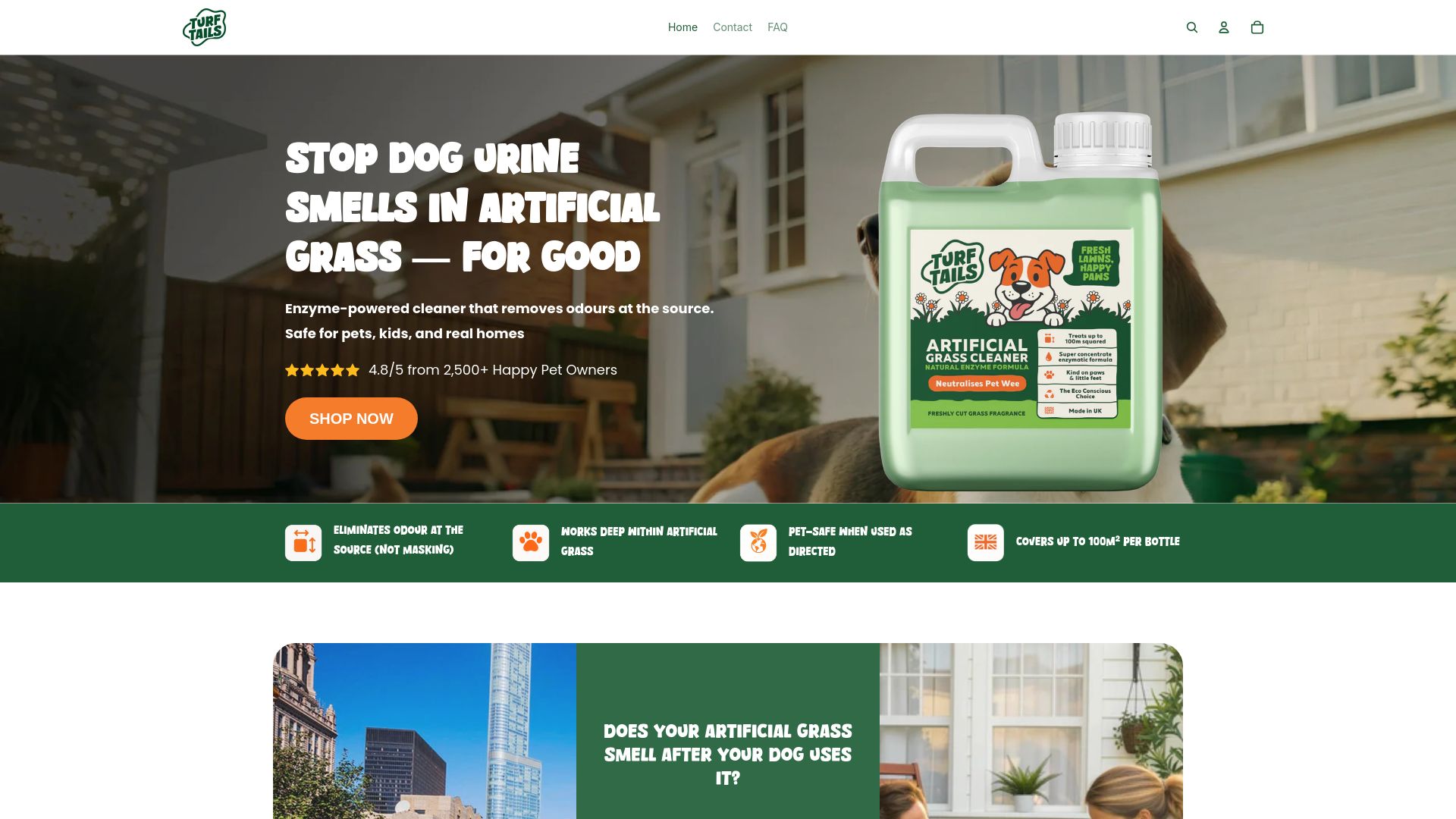
One concentrated bottle covers up to 100m², which makes it a practical option whether you’re treating a small patio corner or a full back garden. If your current cleaner has failed a fresh stain test or a blacklight check, that’s the moment to switch rather than keep dosing a formula that’s no longer active. Head to the Turf Tails product page to check coverage for your garden size and place an order.
Sources
- Enzyme‑based cleaners explained: chemistry & formulation
- How long does enzyme cleaner take to work? (Times)
- Stability challenges: why enzymes can lose potency over time on shelves – Suds And Steam
- Do cleaning products expire?
- Proteins: structure and stability — NCBI Bookshelf
FAQ
Does enzyme cleaner go bad?
Yes, the liquid rarely becomes harmful, but the enzymes progressively lose their catalytic activity, so an old bottle may do little more than a plain rinse of water.
Do enzymes go out of date?
Enzymes denature over time, especially with heat, UV exposure, or pH shifts, and once that structural change happens it cannot be reversed by better storage afterwards.
How can you tell if a cleaning product has expired?
Check for an off smell, separation, or clumping first, then confirm with a small stain or odour test, and use a UV blacklight on pet urine spots to check whether fluorescence persists after treatment.
What is the typical shelf life of enzyme cleaners?
Unopened bottles typically last about one to two years under good storage, while opened bottles usually hold up for several months depending on how well they’re sealed and where they’re kept.
Can you use an expired enzyme cleaner?
You can apply it without safety concerns in most cases, but it likely won’t remove the stain or odour effectively, so a quick performance test before relying on it is worth the two minutes.