

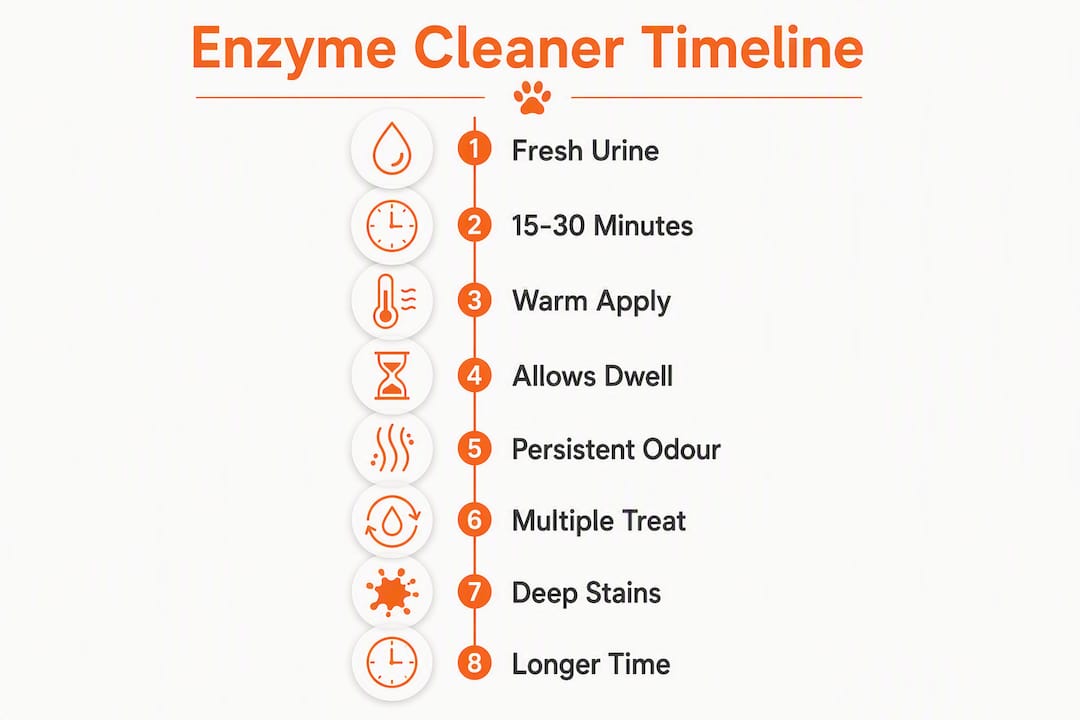
On fresh dog urine, an enzyme cleaner typically works within a range of minutes to about an hour. Set-in urine that has dried into your artificial grass fibres needs several hours to a full day, often with multiple repeat treatments. The key is keeping the treated area moist throughout so the enzymes stay active long enough to finish the job.
Act now if the urine is fresh:
- Blot or scoop any excess liquid first
- Apply enzyme cleaner generously, saturating the affected zone
- Keep the area damp (cover with a cloth or light plastic wrap)
- Wait at least 15–30 minutes before checking; longer for older stains
Consumer Reports’ comparative analysis confirms enzyme cleaners are the most reliable option for permanent odour elimination in pet households. ASM Journals research on multi-enzyme formulations shows why the right product matters. Turftails is formulated specifically for artificial grass, targeting urine compounds at the molecular level rather than masking them.
Table of Contents
- How do enzyme cleaners actually remove urine odour?
- What timeline should you expect after applying?
- How to apply enzyme cleaner to artificial grass step by step
- What to do when the odour persists after treatment
- Is enzyme cleaner safe for pets and children?
- Key takeaways
- What most owners get wrong about enzyme cleaners
- Turftails: built for artificial grass, not borrowed from a general cleaner
How do enzyme cleaners actually remove urine odour?
Enzymes are biological catalysts. When you apply an enzyme cleaner to dog urine on artificial grass, the enzymes latch onto organic molecules — proteins, fats, and uric acid residues — and break them apart until there is nothing left to smell. No masking, no perfume cover-up. The odour is gone because the source compound no longer exists.
Urine is not a single substance, which is why formulation matters. Multi-enzyme blends outperform single-enzyme products on complex organic soils like urine because different enzyme classes (proteases for protein, lipases for fats, uricase for uric acid) each target a different molecular component. A product with only one enzyme type will leave some compounds untouched.
Dwell time is not a sign that the product is slow. BASF’s Jatin Sharma frames it plainly: sustained wet contact is the biological reaction time the enzymes need to dismantle complex organic waste. Rinsing too early simply stops the process mid-way. Consumer Reports notes that while chemical oxidisers can lift visible stains faster, enzyme cleaners are safer and more reliable for eliminating odour permanently.
What timeline should you expect after applying?
The age of the urine and the depth it has reached into your turf’s infill are the two biggest variables.
| Stain type | Typical contact time | Notes |
|---|---|---|
| Fresh urine (surface only) | 15–30 minutes | Enzymes act quickly on intact proteins |
| Set-in urine (dried into fibres) | 30 minutes–4 hours | May need a second pass |
| Old urine (infill/backing affected) | 15–30 minutes to 24 hours | Cover to retain moisture; repeat likely |
Beyond stain age, four factors shift the response time noticeably. Temperature is the most overlooked: enzyme activity slows in cold conditions and high heat above the enzyme’s tolerance will denature them entirely. On a cold UK winter morning, expect the upper end of every timing range. Dilution and coverage matter too — under-diluting wastes product, but over-diluting reduces enzyme concentration below the effective threshold. Drainage and infill on artificial grass create a hidden reservoir for urine; if the liquid has soaked through to the backing or sub-base, surface application alone will not reach it. Moisture retention is the factor most owners miss: enzymes stop working when they dry out, so a patch that dries in 20 minutes on a warm day has had far less active treatment time than the label suggests.
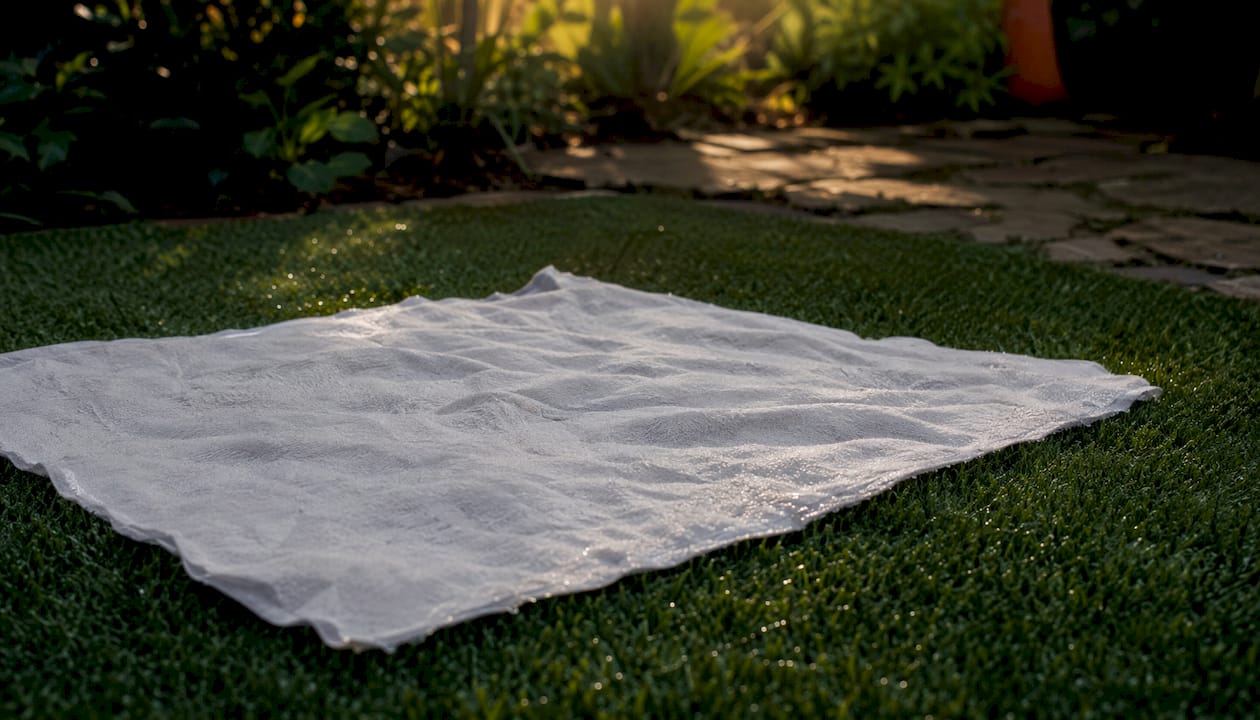
Pro Tip: On a warm day, lay a damp cloth over the treated patch immediately after applying. This creates a humid micro-environment that keeps the enzymes active for the full dwell period, especially useful for set-in stains on artificial grass where the infill traps heat.
How to apply enzyme cleaner to artificial grass step by step
Getting the application right the first time saves you a second or third treatment. Follow these steps in order.
- Remove solids and blot liquid. Scoop any solid waste and press an absorbent cloth firmly onto wet patches to lift as much urine as possible before applying cleaner.
- Rinse lightly if heavily soiled. A brief rinse with cold water dilutes concentrated urine and opens the fibres slightly, helping the enzyme cleaner penetrate.
- Apply generously to the affected zone. Saturate the area rather than misting it. For a typical dog-sized patch (roughly 0.5 m²), use enough product to visibly wet the fibres and reach the infill layer. Turftails covers up to 100 m² per bottle as a concentrated formula, so a small patch needs only a modest amount of diluted solution.
- Keep the area moist. Cover with a damp cloth or loosely draped plastic. For fresh urine, maintain moisture for at least 15–30 minutes. For set-in urine, aim for a minimum of 4 hours, ideally overnight.
- Do not rinse early. Wait at least 10–30 minutes for fresh stains and much longer for deep-set ones before rinsing. Rinsing too soon halts the enzymatic reaction.
- Check and repeat if needed. Smell the area once dry. A faint residual odour means the enzymes need another pass, not that the product has failed.
Do not mix enzyme cleaner with bleach or vinegar — both deactivate enzymes immediately. Avoid applying in direct hot sunlight without covering the patch, as surface heat will denature the enzymes before they finish working.
What to do when the odour persists after treatment
Start with a quick diagnostic before reaching for more product.
| Check | What to look for | Action |
|---|---|---|
| Stain age | Was this urine weeks or months old? | Expect 2–3 treatments with 12–24 hour dwell each |
| Coverage | Did you saturate the infill layer? | Re-apply with more volume, not just surface misting |
| Drying speed | Did the patch dry within 30 minutes? | Cover immediately next time to retain moisture |
| Infill contamination | Does the odour return after rain? | The sub-base or infill may need deeper flushing |
If two full applications with overnight dwell times produce no improvement, the chemistry of the stain may have changed. Enzyme action targets organic compounds; mineral deposits, rust, or heavily oxidised urine residues require different methods. At that point, a professional artificial grass cleaning service or partial infill replacement is the practical next step.
Is enzyme cleaner safe for pets and children?
Most enzyme cleaners, including Turftails, are safe once the treated surface is dry. The active enzymes are biological proteins that break down naturally and leave no toxic residue. That said, keep pets and children off the wet area while treatment is active.
Practical safety guidance:
- Keep dogs and children off treated turf until the surface is fully dry to the touch
- Wear gloves when handling concentrated solution, particularly for large-area treatments
- Apply in a ventilated outdoor space; artificial grass is open-air, so this is rarely a concern
- Never mix with bleach, disinfectants, or vinegar — the reaction destroys enzyme activity and can produce irritating fumes
- Check UK product labels for COSHH (Control of Substances Hazardous to Health) guidance if using a concentrated formula indoors or in a kennel
- Puppies and dogs that chew or lick surfaces should be kept away until the area is completely dry
For broader guidance on keeping dogs healthy around cleaning products, vet-backed pet health resources are a useful reference point. If your dog repeatedly targets the same patch, training tools for home use can help reduce the frequency of treatment needed.
Key takeaways
Enzyme cleaners remove dog urine odour permanently by breaking down organic compounds at the source, with fresh stains responding in 15–30 minutes and old stains requiring up to 24 hours of moist dwell time across multiple applications.
| Point | Details |
|---|---|
| Fresh urine timing | Apply and keep moist for 15–30 minutes; most fresh stains resolve in one treatment. |
| Set-in urine timing | Allow 15–30 minutes to 24 hours of dwell time; cover the patch to retain moisture throughout. |
| Repeat applications | Old or deep stains need 2–3 treatments with 12–24 hours between each pass. |
| Moisture is critical | Enzymes stop working when dry; always cover treated areas to extend active contact time. |
| Turftails for artificial grass | Concentrated, no-rinse formula covers up to 100 m² and targets urine compounds rather than masking odour. |
What most owners get wrong about enzyme cleaners
The single biggest mistake is treating enzyme cleaner like a spray-and-wipe product. It is not. The dwell time is the treatment. Owners who spray, wait two minutes, and then rinse are essentially paying for a product they never let work.
The second mistake is under-applying. A light mist on the surface of artificial grass does almost nothing if the urine has reached the infill. You need enough volume to saturate the fibres and penetrate downward. That is where the odour actually lives.
Patience and correct application matter more than which product you choose, though formulation does make a real difference for stubborn, old stains. Multi-enzyme products that target uric acid specifically are worth the extra attention when you are dealing with months of accumulated odour rather than a single fresh accident.
Turftails: built for artificial grass, not borrowed from a general cleaner
Turftails is not a repurposed household enzyme cleaner. It is formulated specifically for artificial grass, where urine compounds get trapped in infill and backing rather than sitting on an absorbent surface.
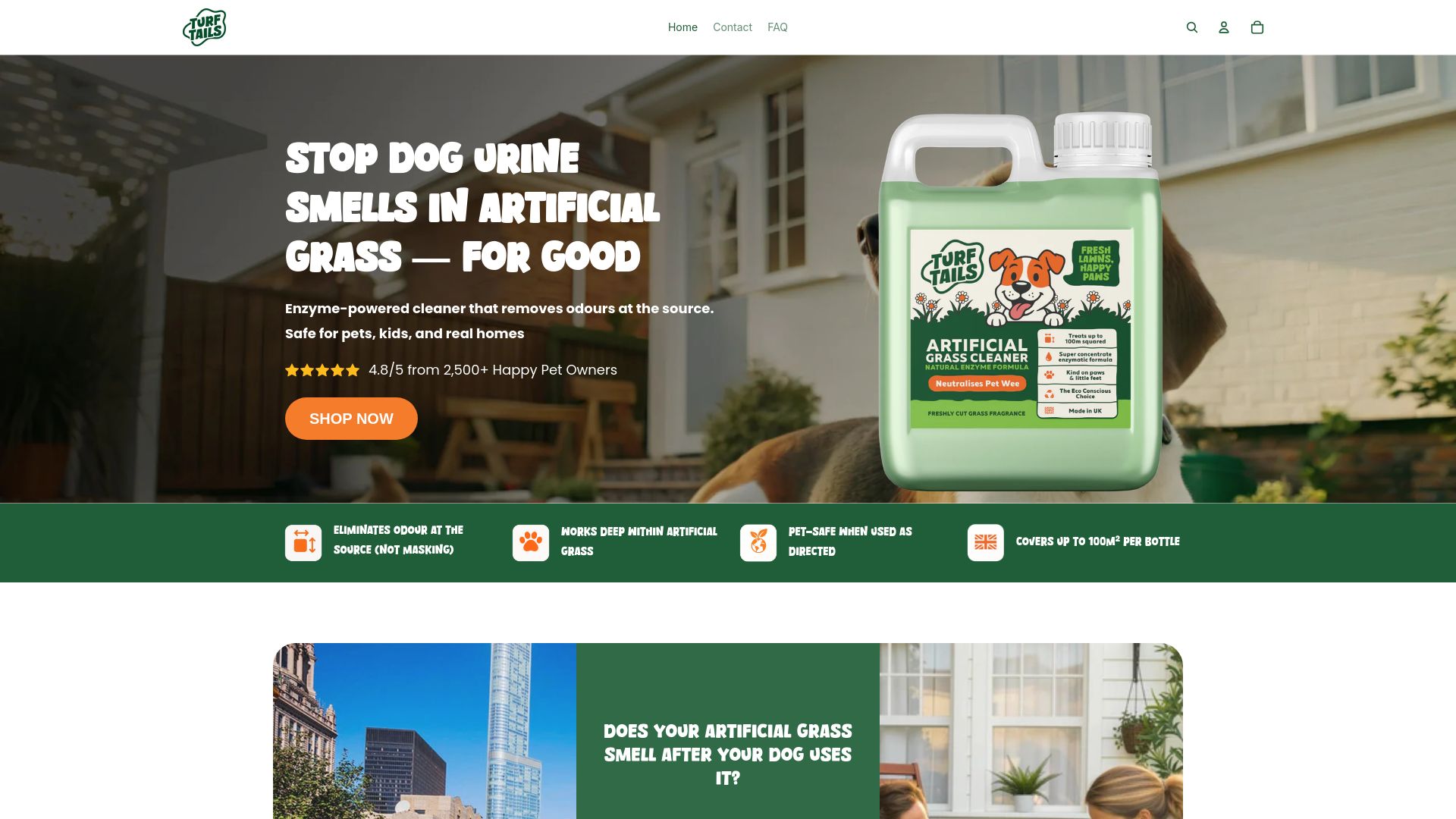
One concentrated bottle covers up to 100 m² of artificial grass, making it practical for everything from a small patio patch to a full garden lawn, kennels, or decking. The formula is eco-friendly, contains no harsh chemicals or artificial perfumes, and requires no rinsing once applied. It is pet-safe when dry, so you are not choosing between a clean garden and a safe one.
For a typical treated patch, dilute the concentrate per the label, saturate the affected zone, cover to retain moisture, and leave for the dwell time appropriate to the stain age. Order a bottle directly from Turftails and have it ready before the next accident, not after.