

The most effective bio enzymatic cleaner outdoor treatment for dog urine on artificial grass is a concentrated formula applied with a sprayer at dusk or early morning, then left to dwell for several hours before the area dries out. This beats masking sprays because it digests uric acid crystals at the source rather than covering the smell for a few hours.
Here’s what to do right now:
- Hose the affected patch lightly so it’s damp, not soaked.
- Mix your enzyme concentrate to the label ratio and spray evenly across the area.
- Let it sit overnight if you can, or for at least a few hours.
- Keep pets off the treated patch until it’s dry.
Pro Tip: Apply out of direct sunlight. Heat and UV kill the living cultures before they’ve had a chance to work, so evening or overcast-day treatment gets far better results.
Key Takeaways
A concentrated bio-enzymatic cleaner applied at dusk with sufficient dwell time removes urine odour at the source instead of masking it.
| Point | Details |
|---|---|
| Apply out of direct sun | Heat and UV kill live cultures; treat at dusk, dawn or on overcast days. |
| Allow proper dwell time | Give a minimum dwell time of several hours to an overnight duration for best results. |
| Agitate for penetration | Brush the cleaner into turf backing and infill so it reaches trapped uric acid. |
| Watch for fast odour return | Smell returning within 48–72 hours signals deep infill saturation needing professional attention. |
| Choose Turf Tails for turf use | Turf Tails covers up to 100m² per bottle, is pet and child safe, and needs no rinsing. |
Table of Contents
- What is a bio enzymatic cleaner and how does it work?
- Why choose enzymes over chemical deodorisers?
- Which outdoor surfaces need this, and when should you apply it?
- How to apply an enzymatic cleaner step by step
- How do you choose the right bio enzymatic cleaner?
- What makes Turf Tails’ formula work so well on artificial grass?
- Why does an enzymatic cleaner sometimes seem not to work?
- How should you store a bio enzymatic cleaner to keep it working?
- Where can you buy a genuine bio enzymatic cleaner in the UK?
- Ready to sort your garden odour for good?
- Sources
- FAQ
What is a bio enzymatic cleaner and how does it work?
A bio enzymatic cleaner isn’t a fragrance product. It’s a formula built around live bacteria and enzymes that feed on the organic matter in dog urine, specifically urea and uric acid, the compounds responsible for that ammonia smell that lingers on artificial grass long after the puddle has dried.
The distinction that matters most is between products with enzymes alone and those with viable bacterial cultures. Enzymes act like molecular scissors, breaking chemical bonds in the waste material. Live bacteria go further: they consume the broken-down matter as food, which means the cleaning action keeps going for as long as there’s something left to eat. Enzymatic cleaners use live enzymes and beneficial bacteria to consume organic compounds in urine, converting urea and uric acid into harmless by-products rather than simply breaking them apart and leaving residue behind.
The odour you smell isn’t the urine itself. It’s uric acid crystals reacting with moisture and bacteria over time. A perfume only hides that reaction. An enzymatic formula removes the crystals that cause it.
That’s why treating the molecular source outperforms disinfectants and air fresheners for anything beyond a quick fix:
- Fragrance sprays mask ammonia temporarily, then the smell returns once humidity rises again.
- Disinfectants kill surface bacteria but don’t touch uric acid crystals bonded to turf fibres.
- Enzymatic formulas keep working below the surface, exactly where the smell actually originates.
Why choose enzymes over chemical deodorisers?
Chemical deodorisers and bleach-based treatments have an obvious appeal: they’re cheap, familiar, and smell strong enough to convince you something happened. The trouble is they rarely solve the underlying problem, and on artificial turf they can actively cause damage.
- Pet and child safety — enzymatic formulas typically contain no harsh chemicals, so there’s no need to keep the family off the lawn for hours afterwards.
- Biodegradability — most break down naturally rather than washing into soil or drainage as concentrated chemical residue.
- Continued action — enzymatic cleaners keep working as long as organic material remains for the cultures to consume, giving you ongoing protection rather than a one-off blast.
- No fibre damage — used correctly, they won’t degrade turf backing the way bleach and ammonia-based cleaners can.
Bleach, ammonia and household disinfectants can strip UV coatings, weaken turf backing, and in some cases void a manufacturer’s warranty outright. Peroxide-based products work but carry real risk of discolouring fibres if misapplied. Oxygen-based treatments and enzymatic formulas each suit different climates and situations, and enzymatic remains the sensible first choice for everyday odour control, with stronger chemical intervention reserved for genuine sanitisation jobs under professional guidance.
Reach for bleach and you might win the smell for a week. Reach for enzymes and you’re removing what causes the smell to come back at all.
Which outdoor surfaces need this, and when should you apply it?
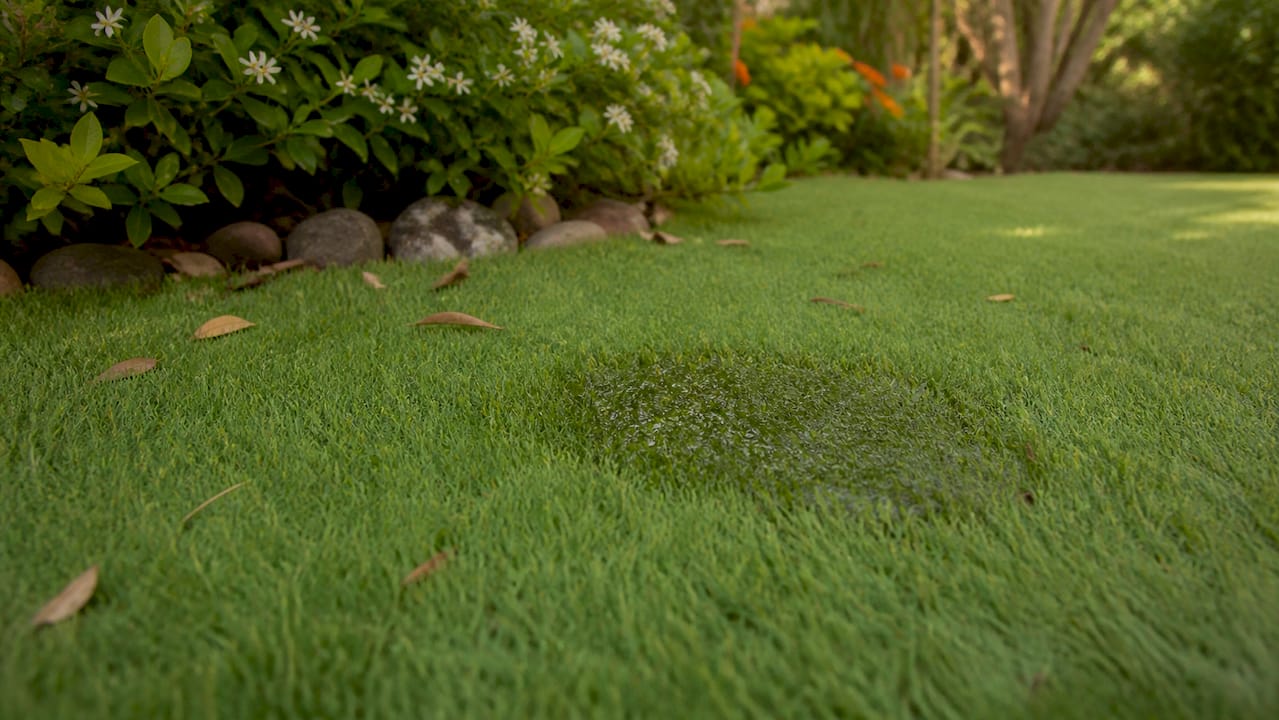
Artificial grass is where bio-enzymatic cleaners earn their keep, particularly around infill, where urine pools and uric acid crystals settle into the backing rather than washing away like on natural soil. But the same principle applies to plenty of other surfaces around the garden.
- Artificial grass and infill — the primary target; enzymes need to reach down to the backing, not just sit on fibre tips.
- Sealed and unsealed concrete or patios — sealed surfaces rinse cleaner, unsealed concrete is more porous and holds odour longer.
- Treated decking — spot test first, as some sealants react differently to liquid treatments.
- Kennels and outdoor fabrics — enzymatic formulas work well on bedding and covers too, provided they’re colourfast.
Timing determines whether an application actually works. High surface temperatures and UV exposure denature the bacteria before they can act, so early morning, evening or overcast days give the best results, with a minimum dwell time of two to four hours, and closer to eight to ten hours if applied overnight.
Fresh stains respond to a single treatment. Old, baked-in odour that’s had weeks to settle into infill usually needs repeat applications, sometimes paired with deeper saturation. As a routine, weekly treatment suits multi-dog households, while fortnightly or monthly upkeep is often enough for a single dog in a milder climate.
How to apply an enzymatic cleaner step by step
Getting this right is less about the product and more about the process. Rushing the preparation is the most common reason results disappoint.
Preparation:
- Clear solids and debris from the area first.
- Lightly hose the patch so it’s damp, not flooded. Excess water dilutes the concentrate before it reaches the infill.
- Dilute your concentrate to the ratio stated on the label using a pump or hose-end sprayer, both recommended for treating larger outdoor areas cost-effectively.
Application:
- Spray evenly across the affected area, working in overlapping passes.
- Agitate with a stiff brush, particularly on turf backing and porous concrete, since agitation drives the enzymes down into infill and backing where uric acid actually collects.
- Leave to dwell. Overnight is ideal; a minimum of a few hours is the floor.
- Rinse lightly only if the label instructs it. Many concentrates are designed to work without rinsing.
A rough coverage guide for common bottle sizes:
| Bottle size | Typical coverage | Best suited to |
|---|---|---|
| — | Small patio or single toileting spot | Spot treatment |
| 1 litre concentrate | Up to 100m² when diluted | Full artificial lawn |
| — | Multiple treatments across large gardens | Multi-dog households, kennels |
Keep pets off wet turf until fully dry, store concentrate in a cool, dark cupboard, and always test a hidden patch on stained decking or sealed wood before treating the whole surface.
Pro Tip: Apply at dusk rather than midday. You’re protecting live cultures from UV and heat, which is the single biggest factor in whether a treatment actually works.
How do you choose the right bio enzymatic cleaner?
Not every bottle labelled “enzyme cleaner” performs the same way outdoors, so a quick checklist saves you buying the wrong thing twice.
- Concentrate vs ready-to-use — concentrates cost less per square metre and suit larger lawns; ready-to-use suits small spot jobs.
- Coverage per bottle — check the stated m² coverage before comparing price, not after.
- Live cultures vs enzymes only — live bacterial cultures consume uric acid crystals rather than just breaking bonds, giving longer-lasting results.
- UV-stabilised, outdoor-specific formulation — a cleaner designed for indoor carpets may not survive garden conditions.
- Pet and child safety claims — look for explicit non-toxic, no-harsh-chemical labelling.
- Biodegradable ingredients — matters if the run-off reaches soil, drains or a vegetable patch nearby.
On cost per square metre, a concentrate almost always wins for anything bigger than a small patio, since you’re diluting a small volume across a much larger area. For big lawns or multiple kennels, confirm the product works with a standard pump or hose-end sprayer before you buy, since some formulas are bottled purely for spot-spray use.
What makes Turf Tails’ formula work so well on artificial grass?
Turftails built its cleaner specifically around the problem outlined above: enzymes and disinfectants that sit on the surface without reaching the infill where uric acid actually accumulates. The formula combines viable bacterial cultures with surfactants that help the liquid penetrate down through turf fibres to the backing, rather than sitting on top and evaporating before it’s done any work.
- Covers a practical area per bottle, suitable for typical UK back gardens.
- Contains no harsh chemicals or artificial perfumes, formulated to be safe around pets and children.
- Designed as no-rinse, so there’s no extra step once dwell time is complete.
- Suitable across artificial grass, patios, decking, concrete, kennels and outdoor fabrics.
Turf Tails positions its formula around breaking down uric acid and related compounds at the molecular level, rather than masking the result, and customer feedback consistently points to a noticeable drop in odour within days of switching from spray deodorisers.
Owners don’t want to apologise for their garden before guests even sit down. A product that removes the source, not the symptom, is what actually fixes that.
For UK pet owners specifically, the concentrate format and no-rinse design mean less faffing about with hoses and buckets, which matters when you’re treating the same patch every week through a rainy British summer.
Why does an enzymatic cleaner sometimes seem not to work?
Most “it didn’t work” complaints trace back to one of a handful of causes, and under-dilution, poor agitation, or heat exposure are the usual suspects.
- Applied in direct sun → heat kills the cultures before they act. Fix: reapply at dusk or on an overcast day.
- Odour trapped deep in infill → surface spraying alone won’t reach it. Fix: deep saturation treatment or professional extraction.
- Wrong product used → some “enzyme” labels contain no living cultures at all. Fix: choose a microbe-based concentrate specifically.
- No agitation → liquid sits on top of fibres rather than reaching the backing. Fix: work it in with a stiff brush.
If odour returns within 48 to 72 hours of a correctly applied treatment, that’s usually a sign the problem sits deep in the infill rather than on the surface, and a professional deep clean or extraction is the next step rather than another round of the same spray.
Pro Tip: Before blaming the product, check your dilution ratio and application time first. Those two factors cause more failed treatments than the formula itself.
How should you store a bio enzymatic cleaner to keep it working?
Live bacterial cultures are exactly that: living. Storage conditions determine whether the bottle in your shed still works six months from now or has quietly gone inert.
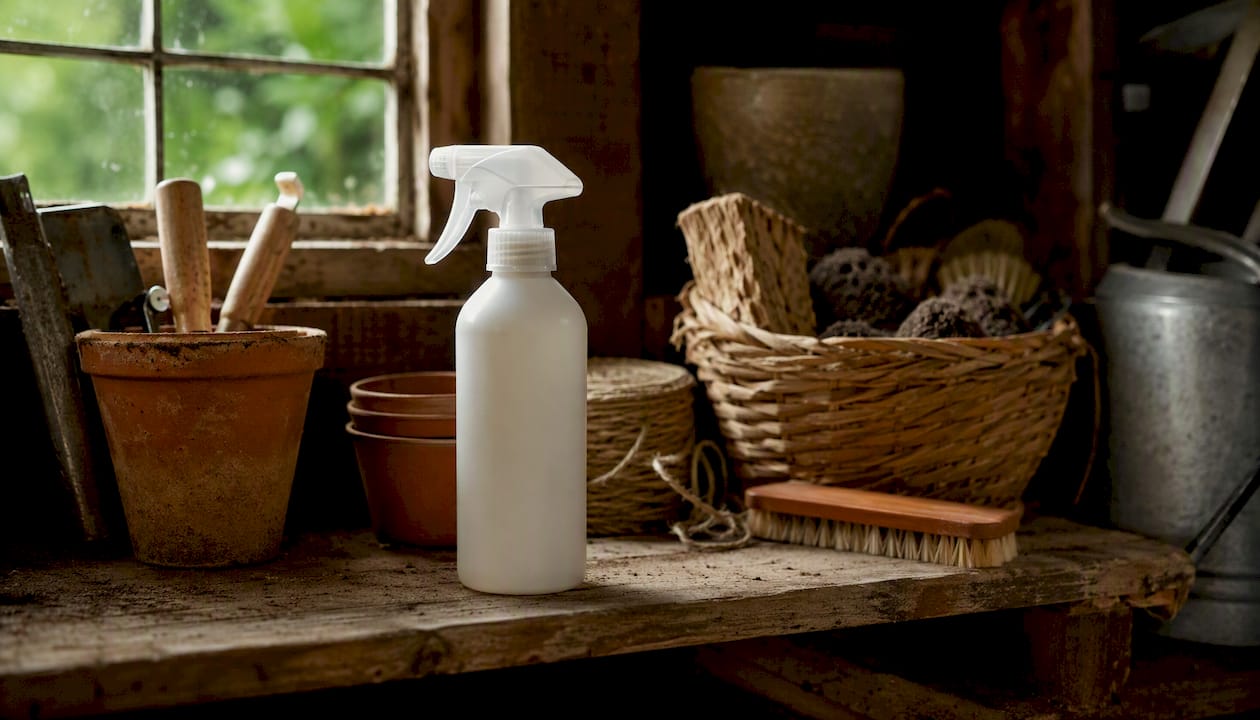
Keep concentrate in a cool, dark place away from direct sunlight and extremes of temperature. A garden shed that bakes in summer sun isn’t ideal; an understairs cupboard or garage shelf out of direct light works far better. Freezing temperatures can also damage live cultures, so bringing bottles indoors during a hard frost is sensible if outdoor storage is your only option.
Always check the cap is sealed tightly after each use. Air exposure gradually reduces potency, and a loose cap left over winter is a common reason a half-used bottle underperforms compared to a fresh one. Most concentrates carry a shelf life measured in months rather than years once opened, so buying a bottle sized to your actual usage, rather than the biggest one on the shelf, avoids waste.
If a bottle has been stored correctly but the liquid looks cloudy, separated in an unusual way, or smells “off” compared to when you bought it, treat that as a sign to replace it rather than risk a weak application. A diluted or degraded batch might still smell vaguely of the product, but the live cultures doing the actual work may no longer be viable, which means you’ll get a disappointing result and assume the product itself has failed you.
Where can you buy a genuine bio enzymatic cleaner in the UK?
Genuine enzymatic formulas are still a smaller category than generic outdoor cleaning sprays, so it’s worth knowing what to look for when you’re shopping rather than assuming every “pet odour eliminator” on a supermarket shelf does the same job.
Specialist pet and turf care brands, including Turftails, sell concentrated formulas directly online, which tends to be the most reliable route to a genuine live-culture product rather than a generic deodoriser rebadged for the pet aisle. Buying direct also means clearer dilution instructions and coverage figures specific to outdoor and artificial grass use, rather than a generic label written for indoor carpet stains.
Garden centres and larger pet retailers increasingly stock enzymatic options too, though the concentration and quality vary considerably between brands. Reading the ingredients list matters here: a genuine bio-enzymatic cleaner lists active bacterial cultures or specific enzyme types, not just a vague “odour-neutralising formula”. If a product doesn’t state whether it contains live cultures or enzymes only, that’s usually worth a second look before buying.
Why we favour enzymatic cleaners for pet owners
Turftails was built around a problem we understood well: dog owners want their garden back without babying it every weekend. Enzymatic treatment respects that. It works with biology rather than against it, and it doesn’t ask you to keep kids and pets off the grass for the rest of the day.
Get the timing right and keep up a simple routine, and the odour problem largely disappears rather than just being covered up for an afternoon.
Ready to sort your garden odour for good?
Turftails is the option built specifically for what this article has covered: a concentrated, pet-safe formula that covers up to 100m² per bottle and works across artificial grass, patios, decking, concrete, kennels and outdoor fabrics without harsh chemicals or artificial perfume.
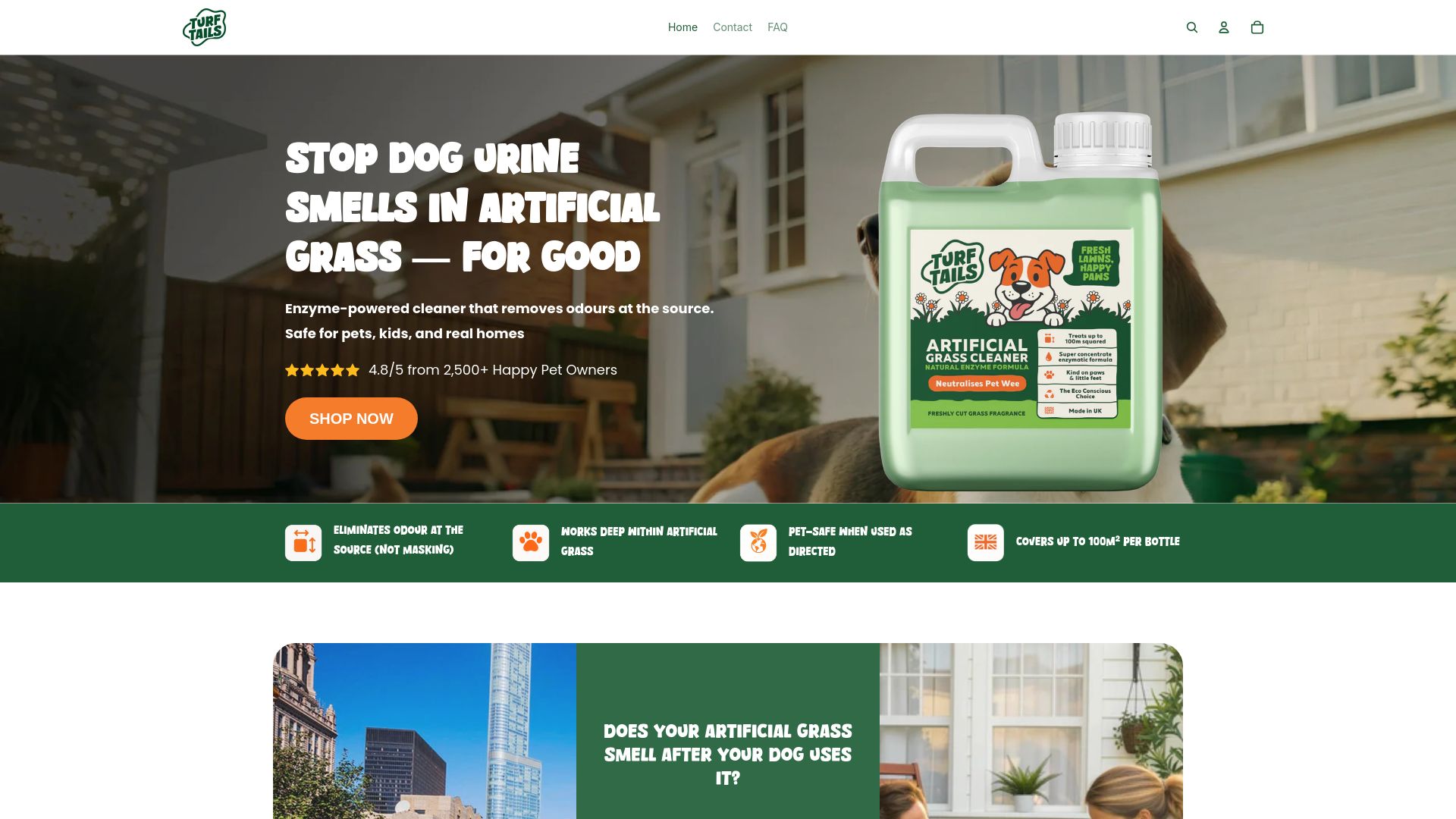
No rinsing required once dwell time is done, which matters if you’ve got better things to do on a Sunday than hose down the whole lawn. Whether you’re dealing with one dog’s regular spot or a multi-pet household with infill that needs more consistent treatment, there’s a bottle size that fits, and a subscription option if you’d rather not think about reordering. Head to the Turf Tails product page to pick a bottle and check the how-to guidance for your specific surface before your next application.
Sources
- Enzyme Cleaner for Outdoor Use: Patio, Deck, and Turf | Enzyme Cleaners
- Best Artificial Grass Cleaner for Dogs (What Actually Works)
- How to Get Dog Urine Smell Out of Artificial Turf: The 2026 Pet Owner’s Guide
FAQ
What is the best bio enzymatic cleaner for outdoor use?
A concentrated formula with viable bacterial cultures, applied at dusk or dawn with several hours of dwell time, performs best on artificial grass and other outdoor surfaces. Turftails is formulated specifically for this use, covering up to 100m² per bottle.
What does a bio enzymatic cleaner actually do?
It uses live enzymes and bacteria to consume urea and uric acid in urine, converting odour-causing compounds into harmless by-products rather than covering the smell with fragrance.
What is the best enzymatic cleaner for dog urine outside?
Look for an outdoor-specific, UV-stabilised concentrate with live cultures rather than enzymes alone, applied with agitation so it reaches the turf backing where uric acid collects.
What is the best enzymatic cleaner available in the UK?
UK pet owners typically get the most reliable results from specialist brands sold direct online, such as Turftails, since these products state coverage, dilution and safety information specific to artificial grass and garden use.
How often should I reapply an enzymatic cleaner?
Weekly treatment suits multi-dog households, while fortnightly or monthly application is often sufficient for a single dog, though fresh stains should be treated as soon as they occur.